People
Sponsoring AI Is Not Enough: A Non-Technical CEO's Take
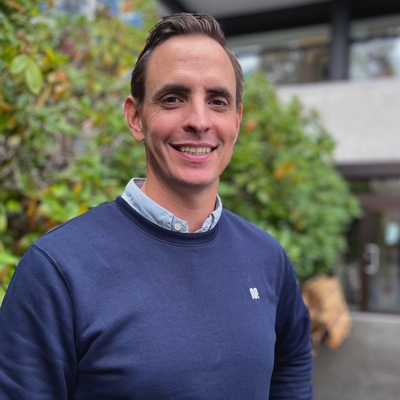
Speaker
Greg Ingram
Position
CEO of Munu (Tech for Hospitality)
Who this talk is for
Primary: engineering leaders, tech leads, and CTOs rethinking how AI reshapes their organization, and ICs who want a sharper picture of what their leadership should be doing. Secondary: developers and designers who want ammunition (and counter-arguments) for conversations with their own executives, plus non-technical leaders wondering if they belong at the keyboard
The talk
I'm not an engineer. I came up through finance, consulting at Bain, and operating roles - not through code. I'm now the CEO of Munu, a Nordic hospitality tech company (Stavanger HQ) supporting thousands of customer locations, and over the past year I've spent real hours, most days building inside Claude Code: invoice automation, system integrations, and an analytics brain that would have required a small data team only a few years ago.
I don't build on our core product. Our engineers are better at that, and that's exactly the point. I build in the gaps - the places where ownership is fragmented - and I've learned more about where Munu and AI is heading from those projects than from any strategy offsite.
This talk is about why a non-technical leader belongs at the keyboard, and what changes when they get there. I'll walk through three shifts that reshaped how I think: starting with no-code tools like n8n and Zapier and letting AI guide me, moving to Claude Code as a real replacement for that stitched-together stack, and then the unlock that mattered most - when our engineers began defining skills, playbooks, and infrastructure standards that let non-engineers like me build seriously without creating a mess. Infrastructure as code, but for the rest of the organization.
I'll share what I've shipped, and what I now believe about how companies need to organize around AI-first thinking. The leaders who only sponsor AI will lose touch with what's possible faster than they realize. Expecting teams to "just build" produces sprawl. The real leverage shows up when leaders dive in personally, when engineers create the rails for everyone else to build on, and when ideas start connecting across silos that AI-first work quietly dissolves.
You'll leave with a clear argument for your own leadership team, a concrete picture of what hands-on looks like for someone whose day job isn't writing code, and, I hope, a little less patience for leaders who talk about AI without ever having used it to build something themselves.
Biography
Greg Ingram is the CEO of Munu, a Nordic hospitality technology company serving thousands of restaurants, bars, and venues across the Nordics - from point-of-sale and payments to bookings and inventory.
His path to running a software company was not a straight line and never went through engineering: five years in finance, seven years at Bain & Company, and an operator role at Gelato - one of Norway's most prominent tech success stories before taking the helm at Munu. He holds an MBA from Harvard Business School and has lived and worked in Norway since 2015.
Over the past year he has become an unlikely Claude Code regular, building internal tools, integrations, and analytics infrastructure for Munu in the gaps where the engineering team is better deployed elsewhere. He believes the non-technical leaders who quietly opt out of building with AI today are the ones who will most struggle to lead through what comes next - and that the unlock for any organization is engineers who design the rails, and leaders willing to actually use them.
Who this talk is for
Primary: engineering leaders, tech leads, and CTOs rethinking how AI reshapes their organization, and ICs who want a sharper picture of what their leadership should be doing. Secondary: developers and designers who want ammunition (and counter-arguments) for conversations with their own executives, plus non-technical leaders wondering if they belong at the keyboard